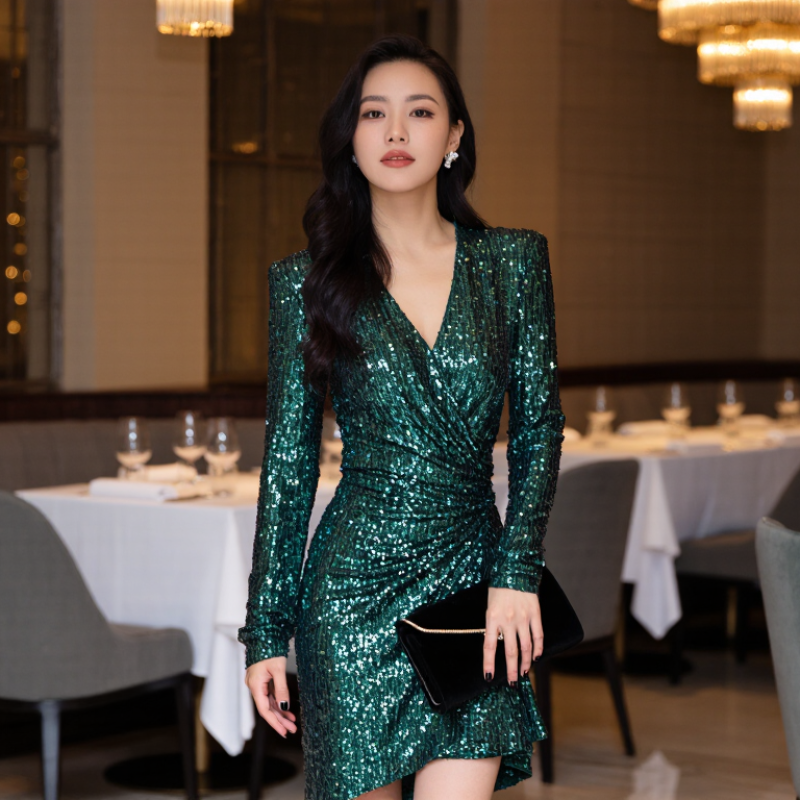
A Green Sequin Dress can transform an ordinary evening into a memorable occasion. Its reflective surface catches every light, from a restaurant chandelier to outdoor fairy lights. However, styling sequins requires balance. Too many competing details can make the outfit feel crowded, rather than polished.
This guide explores practical ways to style a Green Sequin Dress for parties, weddings, dinners, and festive events. You will learn how to choose shoes, jewelry, bags, jackets, and makeup without competing with the dress. Neutral accessories often create the cleanest result. Black heels add definition, while nude sandals keep the look lighter. A velvet clutch can introduce texture without adding unnecessary shine. Keep it simple.
Fit matters as much as color. A dress that sits comfortably at the shoulders and waist will look more refined than one that constantly needs adjusting. Try the complete outfit under different lighting before leaving home. Sequins may appear emerald, teal, or almost black depending on the surroundings. That small test can prevent an unexpected color clash.
Personal experience also matters. Some styling rules sound dependable, yet they do not suit every body shape or event. I once paired bright earrings with a heavily embellished dress, and the result felt louder than planned. The lesson was useful: let one element lead. Consider the venue, season, dress silhouette, and your comfort level before choosing accessories. The best outfit should sparkle confidently, not demand constant attention.
A green sequin dress combines strong color with moving light, so styling depends on balance. Emerald green often looks richer under warm lighting, while cooler green can appear sharper outdoors. Before choosing accessories, check the dress in daylight and evening light. This small test prevents surprising color changes.
Shine already creates visual movement. Keep jewelry simple, using small metal earrings or one structured bracelet. Neutral shoes in black, silver, or soft beige can ground the outfit without competing with the sequins. A matte clutch also works well because its texture contrasts with the reflective surface. Avoid matching every detail too closely. The result may look overly planned.
The silhouette deserves equal attention. A fitted dress benefits from clean, understated layers, such as a smooth tailored coat. A loose or draped shape may need sharper shoes to add definition. Consider where the sequins catch light around the waist, shoulders, and hem. I once paired a bright green dress with equally bright accessories, and the outfit felt crowded. It looked exciting in photographs, but uncomfortable in person. Movement matters. Walk, sit, and raise your arms before leaving home. Check the hem, straps, and lining. A beautiful dress still needs practical comfort. Sometimes the best styling choice is one fewer accessory.
| Style Dimension | What to Consider | Recommended Choices | Practical Styling Notes |
|---|---|---|---|
| Green Shade | The undertone and depth of green affect the overall impression of the outfit. |
Emerald green for a rich, evening look; olive green for a softer, earthy appearance. |
Use neutral accessories when the dress has a vivid or highly saturated green color. |
| Color Balance | Sequins already create visual impact, so supporting colors should usually remain controlled. |
Black for contrast; ivory for softness; navy for a deep, refined palette. |
Limit the outfit to two or three main colors to keep the look cohesive. |
| Metallic Finish | The hardware color can either complement the green or compete with its shine. |
Gold works well with warm or yellow-based greens; silver suits cooler blue-based greens. |
Repeat the chosen metal in only one or two accessories, such as earrings and a clutch. |
| Sequin Density | Dense, reflective sequins appear more formal, while smaller or less reflective embellishment feels easier to wear. | Choose a fully sequined dress for evening events and a lightly embellished style for less formal occasions. | Avoid adding heavily embellished shoes, bags, and jewelry at the same time. |
| Dress Silhouette | The shape of the dress determines how accessories and footwear should be balanced. |
Column or sheath: sleek accessories; A-line: delicate, proportional accessories; Wrap style: simple jewelry and defined footwear. |
Match the scale of accessories to the dress. A dramatic silhouette can support slightly bolder earrings. |
| Neckline | The neckline influences whether a necklace enhances or interrupts the design. |
V-neck: pendant or drop earrings; Strapless: statement earrings or a short necklace; High neck: earrings without a necklace. |
Keep necklaces fine and uncomplicated when the neckline already has decorative detail. |
| Length and Occasion | Hem length helps establish the formality of the outfit. |
Mini: cocktail parties and festive evenings; Midi: weddings and dinner events; Floor-length: formal evening occasions. |
Consider the venue, dress code, and season before choosing the final accessories. |
| Footwear | Shoes should support the dress without drawing attention away from the sequins. | Metallic sandals, black pumps, nude shoes, or clean-lined ankle-strap heels. | Simple designs are usually more versatile than highly decorated shoes. |
| Handbag | A compact bag maintains a polished proportion with a reflective dress. | Choose a small clutch or structured mini bag in black, ivory, gold, silver, or a closely related green. | Avoid large logos, excessive texture, or competing glitter when the dress is already highly reflective. |
| Jewelry | Jewelry should frame the face and neckline rather than compete with the sequins. | One focal piece, such as chandelier earrings, a cuff bracelet, or a refined pendant. | Remove at least one accessory if the outfit begins to look visually crowded. |
| Layering | Outer layers can reduce the impact of shine if their color or texture is too busy. | A tailored black blazer, a smooth ivory wrap, or a simple dark coat. | Select fabrics with a clean surface so they contrast with, rather than compete with, the sequins. |
| Makeup and Hair | The reflective dress benefits from balanced beauty styling. | Soft neutral makeup, defined lashes, a clean updo, or smooth waves. | Coordinate the makeup intensity with the event; avoid matching green eyeshadow too closely to the dress. |
| Comfort and Fit | Sequins can feel heavier and less flexible than unembellished fabrics. | Check shoulder comfort, lining, arm mobility, zipper placement, and hem length before wearing. | Wear seamless undergarments and test the dress while sitting, walking, and moving your arms. |